Featured

How you can help – today!

This post is the companion article for our recently published one-pager which you can find online here as a PDF. Each 8.5 x 11 sheet can be cut into three brochures and although it looks nicer in colour you can also print it in black and white. If an image is better for sharing on social media here are links to page 1 and page 2.

For a longer history of NSUN than is shown on the brochure see About Us page.

Saying Hi to your neighbour

Although many members of NSUN have worked in the homelessness sector for years or have lived experience of being unhoused themselves for many of us it was challenging and difficult in the early days of the pandemic to know how to interact appropriately with our neighbours sheltering in the city parks (that is where we did most of our early work). So we understand that you might feel awkward or afraid or scared you’ll say the wrong thing – or a combination of all of these.

There are some tips for how to get better at interactions with folks experiencing homelessness at the Front Steps website and the Mission Old Brewery website

But really the best advice is to be humble, human and genuine – think about a time you have felt out of place and maybe a bit leery of other people (maybe your first day on a new job or traveling to a country where you don’t speak the language) and think how you would like to have been treated.

Educate Yourself

There are many, many harmful, inaccurate and persistent myths around homelessness and unhoused people as a group. That it is a choice to be homeless, that all homeless people are mentally ill or addicts (or both) and that homeless people are uniformly violent and are to be feared and avoided at all costs. Even language is difficult – which is the right word to use – homeless or unhoused (we tend to use unhoused because our feeling is that many people do have a home – their tent or tiny home – but they are still unhoused because this living situation does not provide many of the services and features that actual housing would provide and which you likely take for granted – electricity, your own bathroom, cooking facilities and so on).

Learning about homelessness can take many forms – here are some resources available:

Courses and other learning resources

The University of Victoria has a micro-credentialing program called Fundamentals for the Homelessness Serving Sector. This online program consists of 6 modules that when completed will earn you a certificate. There is no cost for the program and it is all online and self-paced. 

Check it out at https://continuingstudies.uvic.ca/health-wellness-and-safety/programs/fundamentals-for-the-homelessness-serving-sector

Canada’s Homelessness Hub has a large directory of learning materials – both training courses and ‘collections’ (groupings of instructional materials, resources, videos, evaluations etc) online that is freely accessible – https://homelessnesslearninghub.ca/

Introduction to homelessness in high-income countries: An open access e-textbook – Nick Falvo https://nickfalvo.ca/book/ 

Non-fiction books about homelessness

  • Rough Sleepers by Tracy Kidder (available from the Greater Victoria Public Library)
  • From the Ashes – Jesse Thistle – “Jesse Thistle is Métis-Cree, from Prince Albert, Saskatchewan, and an assistant professor in Humanities at York University in Toronto” – “In this extraordinary and inspiring debut memoir, Jesse Thistle, once a high school dropout and now a rising Indigenous scholar, chronicles his life on the streets and how he overcame trauma and addiction to discover the truth about who he is.” (available from the Greater Victoria Public Library)
  • Souls in the Hands of a Tender God – Craig Rennebohm (with David Paul) – Reflections from a UCC minister who spend over twenty years offering companionship to unhoused community members through the Mental Health Chaplaincy in Seattle
  • Two books from Dr. Josephine Ensign, a professor in the School of Nursing at the University of washington – Catching Homelessness: A Nurse’s Story of Falling Through the Safety Net – and – Skid Road: On the Frontier of Health and Homelessness in an American City
  • Sanctuary: a Meditation on Home, Homelessness, and  Belonging – A short (104 page) meditation on oppression and homelessness from a Zen priest
  • Homelessness: The Making and Unmaking of a Crisis – Jack Layton – For historical context from a Canadian perspective (published in 2000)
  • Tell Them Who I Am – Elliot Liebow – a Classic work from an anthropologist who spent the final years of his life volunteering in women’s shelters in Washington DC.
  • Disrupting Homelessness: Alternative Christian Approaches – Laura Stivers – An analysis  of the response to homelessness from a faith-based lens, written by a professor of philosophy and religion at Dominican University of California.

Fiction/memoir about homelessness

  • Ragged Company – Richard Wagamese – “Ragged Company is a journey into both the future and the past. Richard Wagamese deftly explores the nature of the comforts these friends find in their ideas of “home,” as he reconnects them to their histories.”
  • Breaking Night: A Memoir of Forgiveness, Survival, and My Journey from Homeless to Harvard – “In the vein of The Glass Castle, Breaking Night is the stunning memoir of a young woman who at age fifteen was living on the streets, and who eventually made it into Harvard.” –
  • The Man in the Dog Park offers the reader a rare window into homeless life
  • A Knapsack Full of Dreams: Memoirs of a Street Nurse – by Cathy Crowe – In A Knapsack Full of Dreams, Cathy Crowe details her lifelong commitment as a nurse and social justice activist—particularly her thirty years as a Street Nurse—with passion, grace, and fortitude

Podcasts/audio series about homelessness

Pushing back against misinformation and stigmatizing language

Invisible People published a 4-part series on fighting misinformation about homelessness, the episodes in the series are listed below with links to each:

  1. Why Fact-Checking is Important When It Comes to Homelessness News
  2. How to Identify Misinformation in Homelessness News
  3. Tackling Misinformation: Strategies Advocates Can Use to Spread the Truth About Homelessness
  4. Join the Fight Against Misinformation About Homelessness

Shifting Hearts and Minds: Practical Communications Strategies for Addressing Homelessness in Mid-Size Cities is a 12-page article with loads of good, practical advice for how to “communicate with purpose, make the best use of resources,  shift  hearts  and  minds,  and  ultimately  advance  your  goal  of promoting human rights-based and sustainable solutions to homelessness in your community.”

Interior Health has a good infographic about how to avoid stigmatizing language about homelessness. 
What NSUN is up to this Winter

NSUN is up to a few things this winter and we invite you to consider whether you’d like to be involved. If any of these are of interest you can go to our contact form and get in touch or send us an email at neighbourhoodsun@gmail.com.

QomQem Sunday Night Outreach Prep

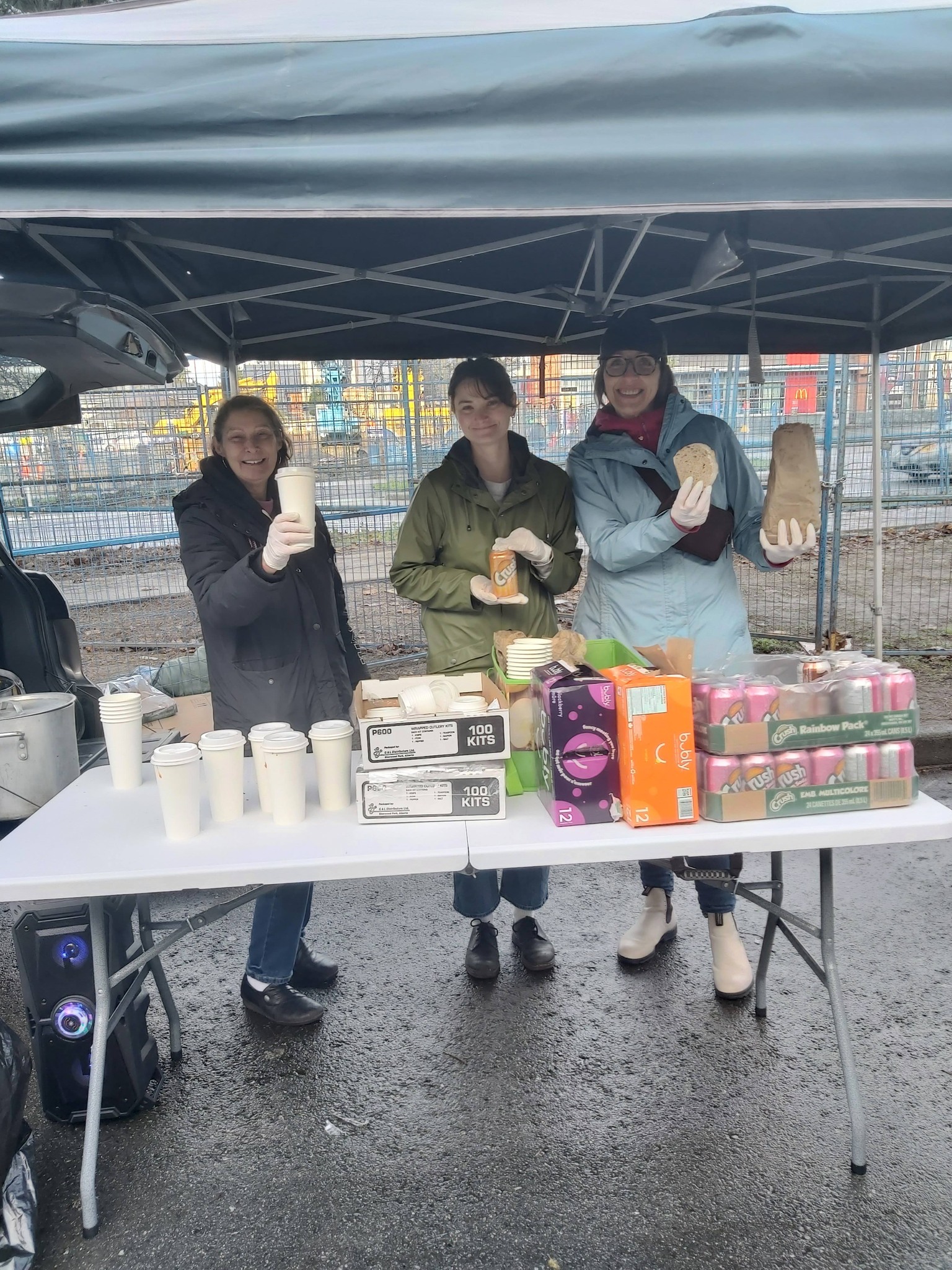
A number of NSUN members (and their kids) turn up on Sunday nights at ~5:30 pm at First Met Church (entrance on 932 Balmoral) to help the QomQem street outreach team prepare their offerings – sandwiches, small bags of assorted candy, hot chocolate and more – to go out on Pandora. This is a hugely satisfying and yet simple process that can be done very quickly when we have the optimal number of hands (not too many as the space is not that big – I think about 10 people total is perfect).

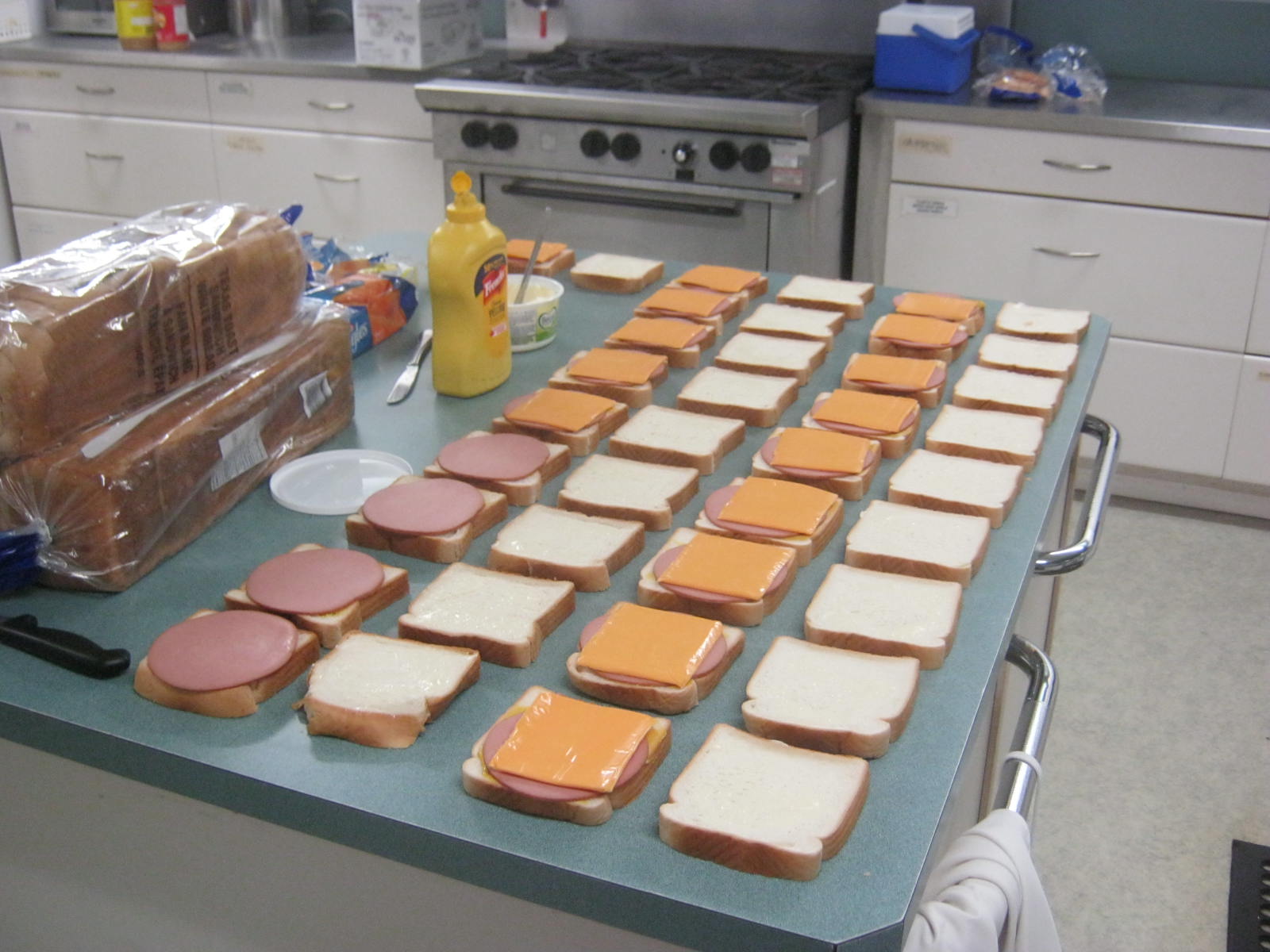
I (Susan) usually work the baloney and cheese ‘line’. Lay out the bread in four columns. Margarine on one slice of bread and a dollop of mustard (which then needs to be spread out) on the other. Then a cheese slice on top of the margarine and then a slice of baloney on top of that. Close the sandwich up. Put it in a bag and put an identifying sticker on the bag (so that when the team is out on the street they know what each sandwich they are offering is).

The same goes on for nutella and peanut butter sandwiches and peanut butter and jam. And two or three people work with a big bin of brightly coloured candies portioning them into small bags so that everyone can have a pocket full of sweetness to look forward to.

The team packs all these items along with fruit cups and pastries and harm reduction supplies and two big containers of creamy, sweet hot chocolate (with marshmallows for adding on as desired) into carts and heads out onto Pandora to offer not just a bite to eat or a hot drink but a friendly face and a non-judgmental listener.

The Longest Night

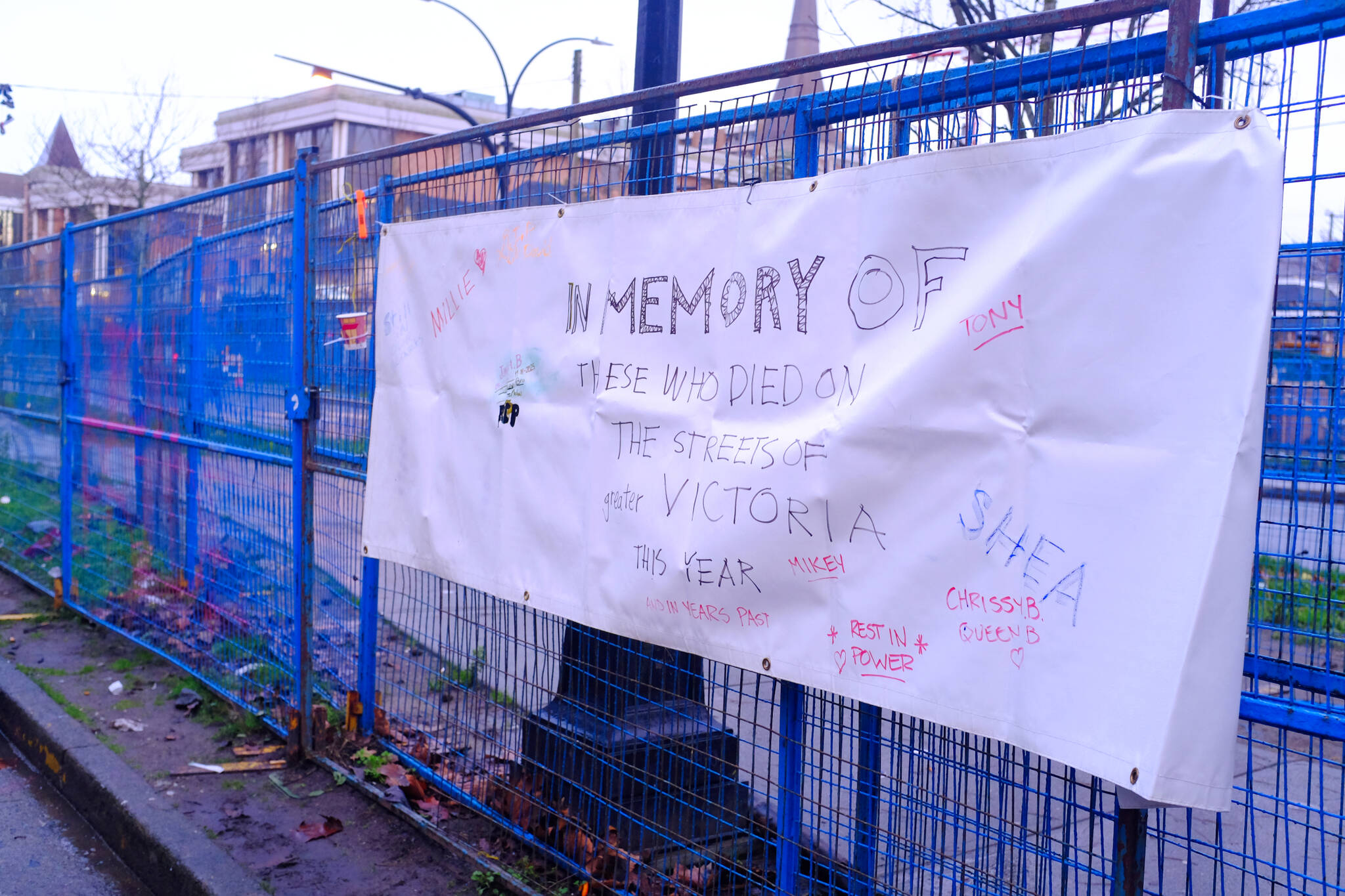
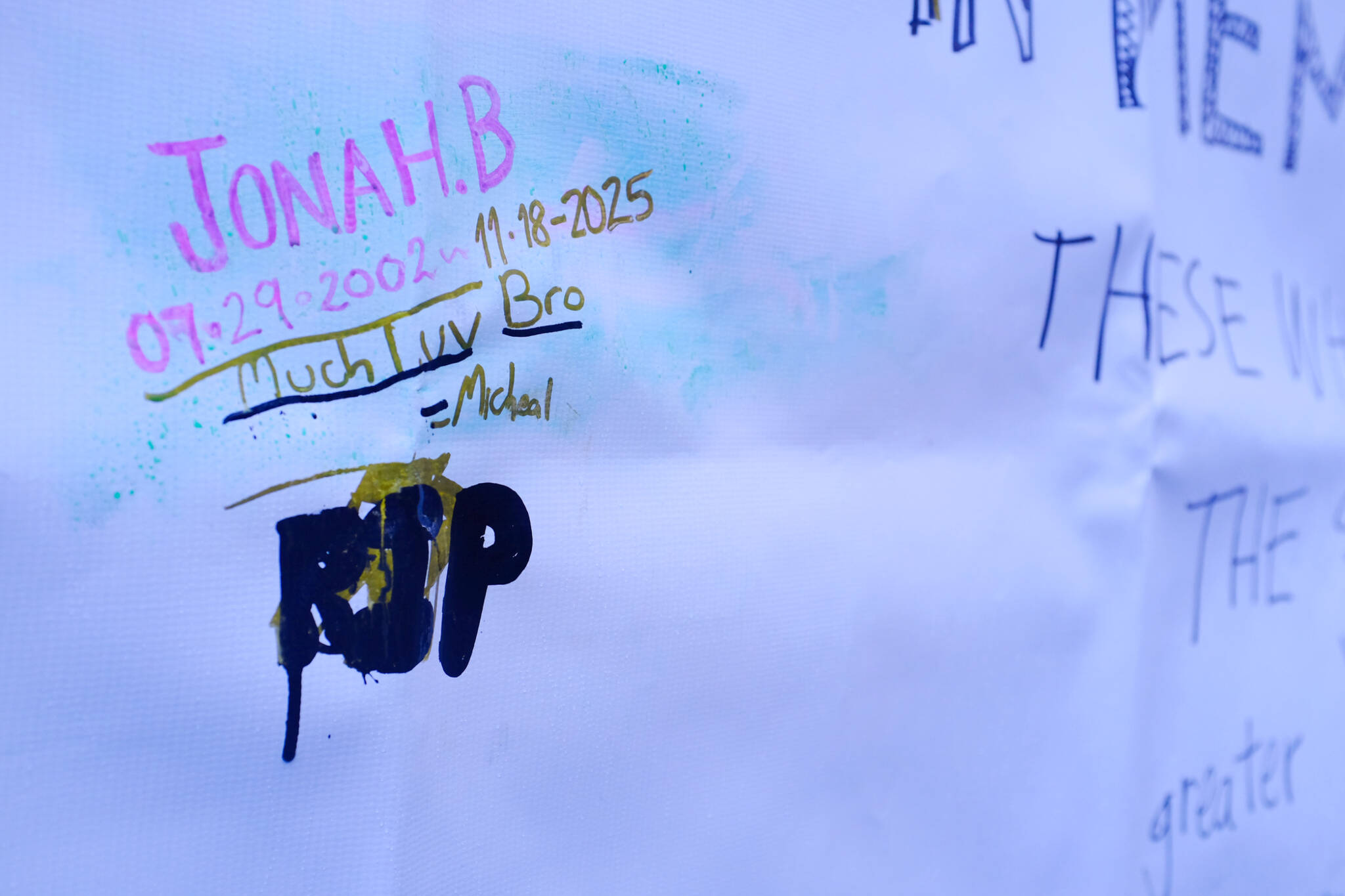
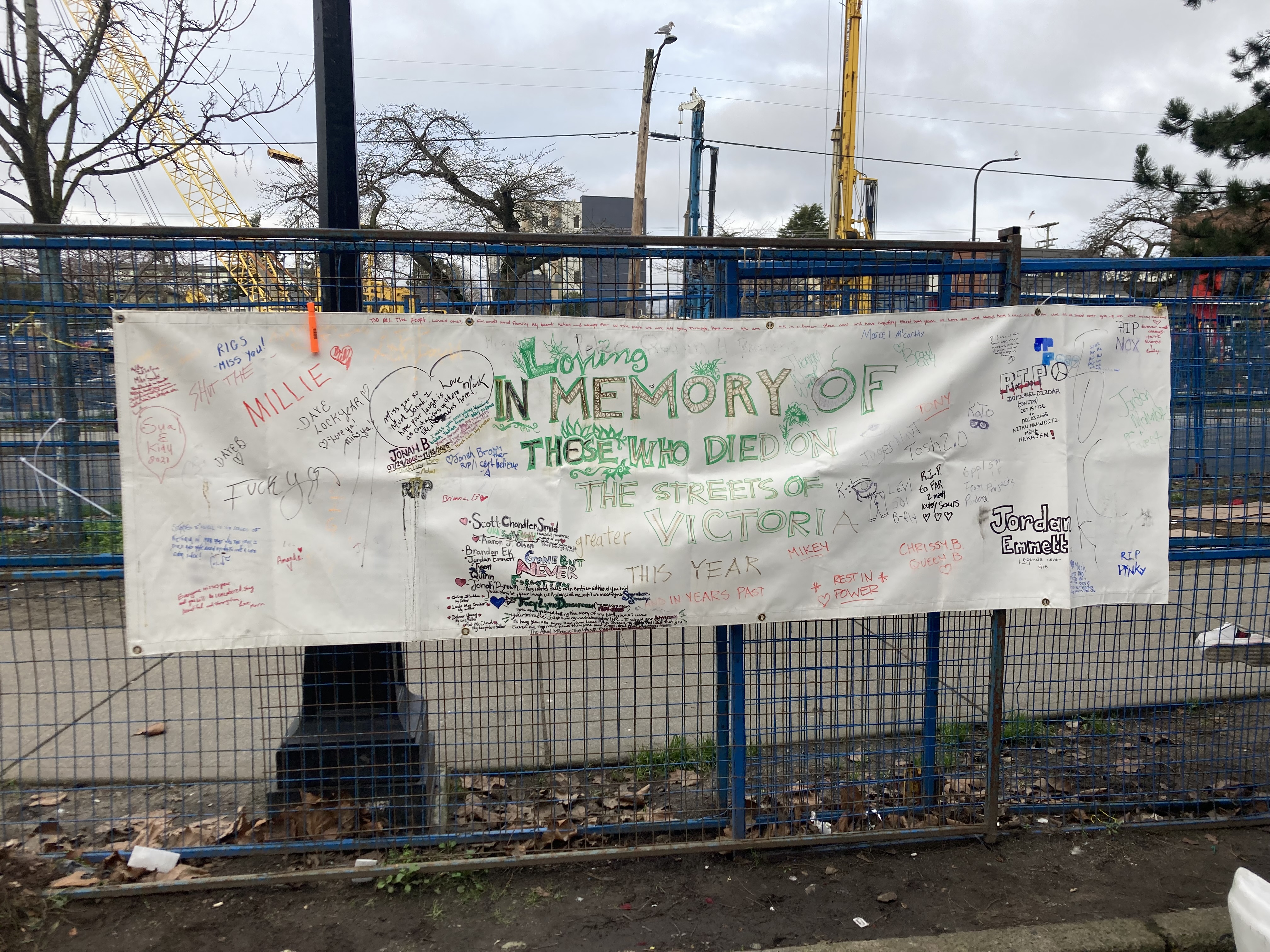
NSUN is also in the midst – with some other organizations in town – of organizing the Longest Night event which is held around the world (but primarily in North America) typically on or around the winter solstice to remember those who died in the previous year while living unsheltered.

At the moment we are still in the planning stage but in the meantime hold the date of Sunday, December 21st open to attend an event likely getting underway at about 4:00 pm.

Soup on Pandora

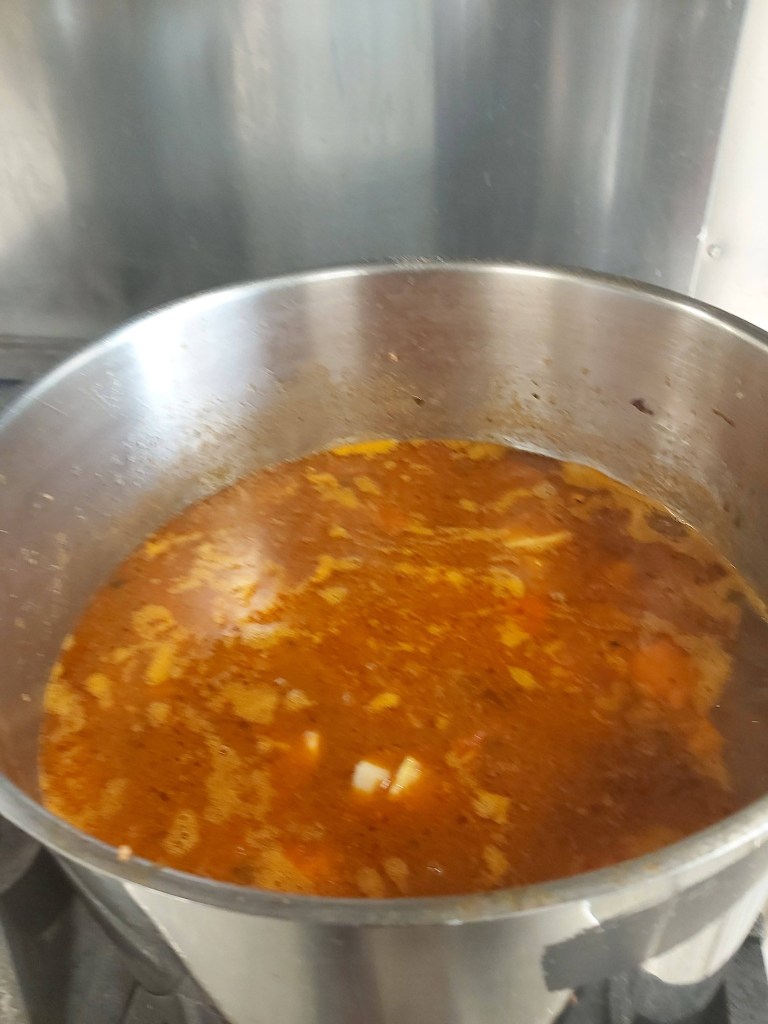
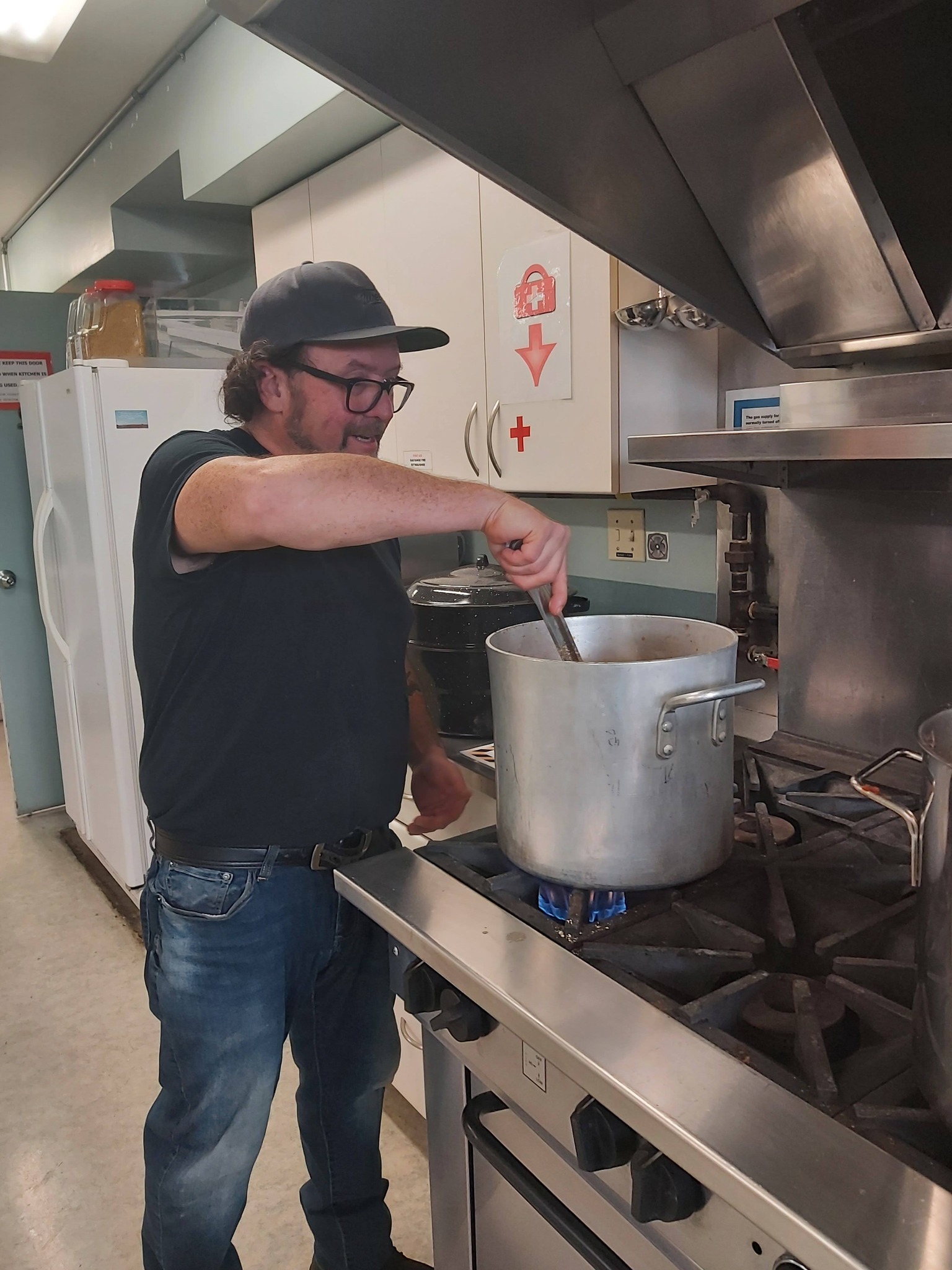
Peer2Peer Indigenous Society did a hot soup event in November and it was so popular they are going to start repeating it monthly and perhaps even twice a month in the New Year. Here are the details of the first event. NSUN will be contributing some funds towards purchasing the ingredients for the soup as well as bowls and spoons. We’ll have more details on how NSUN volunteers can help coming later. Check back closer to December 19 or go to our contact form and get in touch or send us an email at neighbourhoodsun@gmail.com.

details of hot soup event on December 19th from 1-4 pm on Pandora Green

Toothbrushes and toothpaste for Project Reconnect

Update – thank you friends, I collected the donation box from FGCA this afternoon (Oct 31) and you helped NSUN meet its commitment to Project Reconnect. If you are interested in learning more feel free to drop by the event this Wednesday, November 5th, at Central Baptist Church (833 Pandora) from 11 am to 3 pm.

Neighbourhood Solidarity with Unhoused Neighbours has committed to donating 100 toothbrushes and 100 tubes of toothpaste to Project Reconnect which will take place at Central Baptist Church (833 Pandora) on November 5, 2025 from 11 am to 3 pm.

If you’d like to drop off these items the Fairfield Gonzales Community Association has a donation box available in the foyer at 1330 Fairfield Rd which is open from 9:00 am to 4:30 pm Monday through Friday.

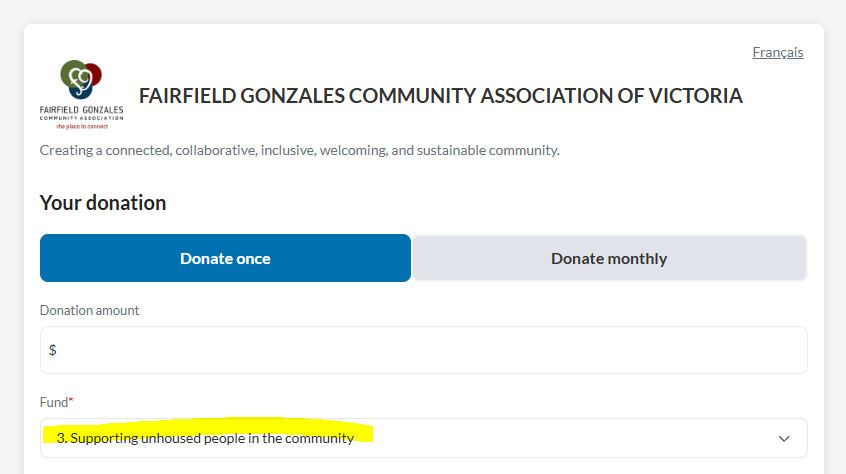
If that doesn’t work for you send us an email (neighbourhoodsun@gmail.com) and we’ll see if we can work something out. If you want to donate funds for us to buy these items (and get a tax receipt if you donate more than $10) go to the FGCA Canada Helps page and set the ‘Fund’ box to option 3, Supporting unhoused people in the community.

Also, here’s a PDF of the donation poster in case you want to have your own donation box at your place of work (and a Canva link here if you want to alter the poster to fit your situation).

NSUN Volunteers Recognized

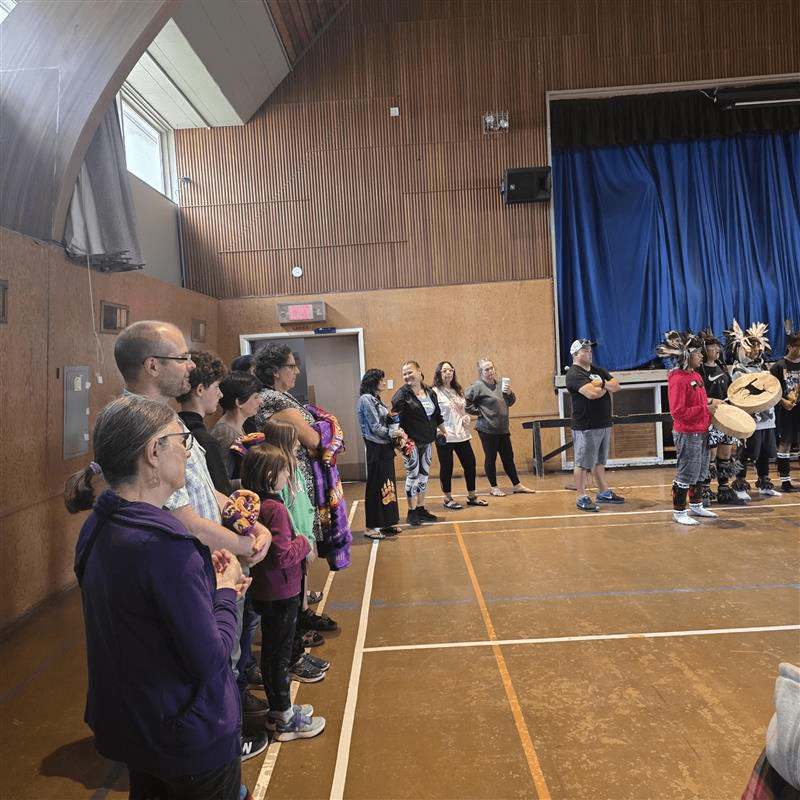
NSUN volunteers Jeff, Susan and Kathryn (along with their kids) were honoured to be recognized by QomQem Coastal Connections at their Seafood Feast in June of this year. These NSUN volunteers have been showing up on Sunday nights (from October until the end of March 2025) to help prepare sandwiches and other items for QomQem’s night outreach. Adult volunteers received beautiful blankets while the kids got gift cards for kid-friendly entertainment.

Everyone gets in on the act – the grown ups get to do the boring jobs like making sandwiches or mixing up big batches of sweet and warming hot chocolate while the kids get the fun task of portioning various kinds of delicious, sticky and colourful candy into small bags. Many hands make quick work and within 60-90 minutes we’ve prepped upwards of 125 sandwiches, bags of candy and cups of hot chocolate.

It is loads of fun and we look forward to resuming our Sunday night routine within a couple of months.

people with blankets at the QomQem seafood feast

NSUN volunteer Susan (with purple blanket)

Sunday night sandwich making (bologna and cheese assembly line)

What your donations bought

Thanks to all of you that donated to our winter campaign which raised just over $500. The response to the piece I wrote for The Observer (page 5) was heartwarming both in terms of donations and those who reached out interesting in volunteering.

The first use of the money was in late December, just before Christmas, when I asked the lovely Niki of The Backpack Project if I could get anything for her organization. She said not at the moment but mentioned that AVI’s night time drop in had a request out on Facebook for some food supplies. I ended up buying about $100 worth of sandwich fixings as well as items for a pancake breakfast the next morning. Unfortunately I didn’t take photos of that donation (but in my defense it’s kind of boring to feature photos of big jugs of milk, cheese slices and loaves of bread).

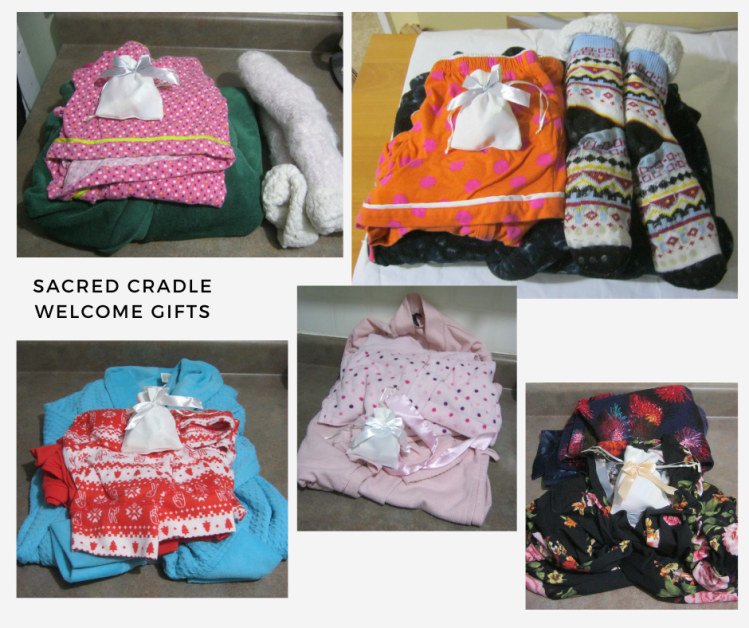
Then in January and February I did two purchases (at the Dollar Tree in Tillicum which features some amazing deals as well as at London Drugs) of gloves, socks and hats. For sure the most fun I had shopping was buying pajamas, slippers and robes (see image below) for the occupants of the newly opened Sacred Cradle House or Xexe Pahlatsis’lelum in lək̓ʷəŋən (lekwangen). Those are some individually wrapped chocolates in the little gauze gift bags on top of each pile of clothes.

Smaller purchases included food for someone sheltering in a local park as well as a new tent and rolling suitcase for the same person (a good alternative to a wagon as it is much easier to take on the bus even though it is big). I bargain shopped for everything I bought (for example chocolates were 50% off as they were left over Christmas stock) and I have a little bit of money left over that will be useful for emergencies that come up.

Speaking of emergencies, if you’ve been watching the weather (and who hasn’t) you probably know that we’ve had more extreme weather in the first few months of the year than in the latter part of 2024. Our first Extreme Weather Alert (EWA) wasn’t called until November 19th and of the 13 extreme weather alerts only 5 were in 2024 – the rest have been since January 6, 2025 (5 in January, 1 in February and 2 in March so far).

When an EWA is called the local organization responsible for managing the Extreme Weather Response (EWR) let’s service providers and others know that the EWA has been called and where people can find overnight shelter. The response this year was very limited consisting of only 30 mats on the floor of the Salvation Army ARC (at the foot of Yates Street). This space also did not accept pets and it wasn’t clear whether people would have anywhere to store their belongings should they come there from a park.

The EWA called at the end of January was brutal as it was called on January 31st and not cancelled until February 15th. You may have seen media coverage at the time with the city requesting staff resources from the province to keep the Cook Street Activity Centre Open as an additional warming centre and the province’s refusal to supply workers.

Typically the ‘extreme weather response’ ends on March 31 – whether Mother Nature has other plans or not. That’s why NSUN welcomes your donations at any time of the year – we never know when an extreme event – heavy rainfall, bitter cold or extreme heat – will raise an urgent demand for warm clothing, tents and tarps to replace those irreparably damaged by weather or cold drinks and misting equipment to respond to heat. Simply go to the FGCA Canada Helps page, select #3 in the drop down list and we’ll turn your donations into whatever is needed to mitigate the crisis of the moment.

Support your Unhoused Neighbours this Winter

This post is intended as a companion piece to the article in the latest issue (December, January, February) of the Fairfield Gonzales Community Association The Observer newspaper (available online and on paper at the FGCA Centre at 1330 Fairfield Road) – simply click on the topic that you are interested in from the list below and you’ll be taken directly to details on that topic as well as links to more information.

Our campaign this winter is raising funds and/or donations of items for the following four organizations:

  1. QomQem Coastal Connections – you can donate directly to QomQem and get a charitable tax receipt
  2. Peer2Peer Indigenous Society – Peer2Peer does not have charitable status so if you’d like a tax receipt you can go to the FGCA Canada Helps page, select #3 in the drop down list and we’ll turn your donations into whatever Peer2Peer tells us is most needed for their street outreach
  3. SOLID Outreach – SOLID does not have charitable status so if you’d like a tax receipt you can go to the FGCA Canada Helps page, select #3 in the drop down list and we’ll turn your donations into whatever SOLID tells us is most needed for their street outreach
  4. The Backpack Project – the Backpack Project does not have charitable status so if you’d like a tax receipt you can go to the FGCA Canada Helps page, select #3 in the drop down list and we’ll turn your donations into whatever the Backpack Project tells us is most needed for their street outreach.

    If you’re interested in taking donations directly to The Backpack Project you can leave items at any one of the following bin locations and here’s a list of what is accepted and what is not Donation bins are available until December 20th (if you are reading this after this date please consider making a monetary contribution via NSUN and we will talk to Niki from the Backpack Project to see what is needed – January and February are still cold and miserable for those living unsheltered).

Here are links to the learning resources mentioned in The Observer article:

  1. Report from the Housing Justice Project evaluating housing in the Capital Regional District “using International Human Rights Standards and the right to housing set out in Canada’s National Housing Strategy Act 2019.”
  2. A link to the University of Victoria’s free online course “Fundamentals for the Homelessness Serving Sector

Thanks for taking the time to read this post and if you’d like to get in touch use our contact form.

IPAC Pitch Competition

On June 27, 2024, I participated in a pitch competition offered by the Institute of Public Administration Canada (IPAC). The topic of the pitch competition was Housing and Homelessness: Community Solutions. We only had 3 minutes to speak and we could use a single slide (here’s an image of mine below).

I’ve created a movie that gives more context than I could give in the presentation and there’s also a PDF of the slides within the movie that contains links to all the things I mention in the movie.

I’ve reproduced the text of my talk below and it is also available as a PDF.


Housing is the solution to homelessness – but homes that most of us can afford are not being built in Victoria at anywhere near the speed that is needed.

Instead of talking about housing tonight I am going to speak about how to better support unhoused people during their long debilitating wait for a home.

Options for where to live in Victoria if you are unhoused are steadily decreasing.

In just over a month, Irving Park and Vic West Park will close to overnight sheltering, leaving only 3 parks available where this is permitted in the city.

A campaign of bylaw sweeps displaces people frequently and causes immense suffering and harm. Where are unhoused people supposed to go?

Housed people would probably respond they could go to shelters but these facilities are often the last resort for many unhoused people-  they are often full to capacity, unsafe for women and gender diverse people, lacking in privacy and cleanliness, places where violence and theft are disturbingly common, and some even require you to vacate the premises during the day.

Additionally, often neighborhoods where such shelters and other homeless serving facilities are located are those that are less affluent and have a higher proportion of households that rent and residents who identify as a visible minority. This breaks the rule of neighbourhood development from Chuck Marohn of strong towns which I have up here on the slide. It’s inequitable and unfair and not surprisingly can cause a lot of resentment and people who are living in or using the services of such facilities feel unwelcome.

The Housing in a hurry initiative addresses these problems by creating micro scale clusters of no more than 5 sheds on available land, whether it be vacant or city owned, in multiple neighbourhoods. These sheds are about the same size as the units at Caledonia Place though at $1,500 each they are much less expensive and quicker to erect. Sanitation and power can be quickly and inexpensively deployed using ready made and locally sourced solutions that will also be climate friendly.

The next step for this initiative would be to run it by people with lived and living experience of homelessness and ask for their feedback and comments.

I acknowledge that this initiative is a departure from the usual top-down large-scale approach and in that I believe lies both its challenges – it will be a lot of work – and its potential to create a truly community-led, person-centric intervention that can create a durable solution to the challenge of keeping unhoused people safe and well while they wait for housing and also creating a more positive experience for the housed neighbours around them.

Impressions of 953/959 Balmoral

On Tuesday, June 25, 2024, Neighbourhood Solidarity with Unhoused Neighbours members were invited to tour the newly opened supportive housing building at 953/959 Balmoral (which I now know has been named The Lily). This is a report from one of the NSUN members who toured the building.

This building was originally scheduled to open in ‘summer 2022’ (see https://ehq-production-canada.s3.ca-central-1.amazonaws.c…) making it almost 2 years late – and this despite the fact that this is a modular build which I thought might make it faster.

What I liked:

  • The room that I could see off of the entry way didn’t look to be as ‘surveillance-y’ as some as I have seen that have a wall of monitors each showing several camera feeds
  • The individual rooms were more spacious than I expected and were light and airy with very high ceilings
  • There didn’t seem to be cameras apparent (one at the entry but I didn’t see any on the floors though I didn’t look carefully – I didn’t see any in the stairwells though I only went down one floor)
  • Drains built into the floor in both the bathroom and kitchen and flooring that curves up onto the wall so there are no crevices for dirt to lodge in (so smart!)

What I didn’t like/was disappointed in:

  • No air conditioning on any floor above the first – it’s great to have big windows for light but that also means heat (though there are blinds) – sadly ironic that this building is opening on the third anniversary of the heat dome that killed 619 people in BC – I think it is unconscionable to put up a brand new building without air conditioning
  • No oven – again, not a deal breaker for many I am sure but it would be nice to have some units with them so perhaps those that might want to bake or roast a turkey at Thanksgiving could ask for one of those rooms
  • No bathtub – this wouldn’t be a deal-breaker for me but I know many people find baths really soothing and good for destressing

Overall I think it looked pretty good and occupancy is supposed to start in 2 weeks. Of course the system is so choked with people waiting that there is little to no chance that anyone from an encampment will get in there – rather people who are in shelter/transitional units will be the priority. I hate that we operate from a scarcity mindset where it’s kind of dog-eat-dog in the waiting line for housing.

Some pictures below.

View out the window – this room is on the second floor. Windows do open which is nice.
Two burner cooktop and no oven. In wheelchair accessible units there is no cupboard under the cooktop.
Single sink – but hey, I live in market rental and I have a single sink (but still covet double sinks something awful).
Shower is spacious, clean and bright and very easy to keep clean as it is a single insert (smart!). Fair amount of storage for towels etc.

NSUN on a summer break – but still lots of action around homelessness!

Just a heads up that NSUN is on a summer break from formal meetings for June, July and August 2024. We’ll resume meetings in September.

However there is still lots going on in terms of homelessness issues and activities to support unhoused and other groups during the upcoming weeks. First we must talk about June 15, 2024 – this is the date by which City of Victoria staff are supposed to “identify at least three indoor or outdoor locations, excluding parks, where sheltering could be permitted, and report back to Council before June 15 with the sites” (from page 8 of the minutes of the April 18, 2024 COTW meeting). It is also roughly the date when the Federal Minister of Housing (Sean Fraser) is bound to respond to the Final Encampment Report from the Office of the Housing Advocate and its finding (though the government has until August 31, 2024 to come back with a plan for encampments).

Closer to home check out these activities and see if you’re inspired to help out/donate/participate at any of them:

  • Pancakes every Monday morning at 10:30 am until they’re gone at the SOLID warming facility (926-930 Pandora) – put on by the fine folks at QomQem
  • National Indigenous People’s Day – June 21, 2024 – volunteers needed from 1:00-9:00 pm – in Quadra Village (see screenshot below and email volunteer@quadravillagecc.com)
  • Pandora Day (a collaboration between the Victoria Downtown Residents Association, NSUN and other organizations) still somewhat tentative at this point as we’re waiting to hear about the success of some funding applications but save the date of August 8, 2024 – volunteers will be needed to help with activities such as: setting up and taking down chairs, tables, canopies, serving food and clean-up, and engaging in conversation with housed and unhoused participants (event will run from ~5:30-8:30 pm)
  • August 31st Moms Stop the Harm event recognizing International Overdose Awareness Day at BC Legislature

We’ll update this list as more things are added. Hope to see you out and about in Victoria this summer – look for folks wearing buttons with the NSUN logo and introduce yourself!